
In short
A ganglion is a harmless, fluid-filled lump around a joint or tendon. When it is painful, interferes with footwear, presses on a nerve or tendon, or returns after aspiration, it can be removed together with its stalk, usually as a day case. You can normally walk in a post-op shoe, stitches come out at 10 to 14 days, desk work often resumes from 1 to 3 weeks, and golf, gym and casual hiking are usually possible by 8 to 12 weeks.
- Anaesthetic
- Local, regional or general anaesthetic
- Hospital stay
- Usually a day case
- Walking afterwards
- Walking in a post-op shoe or boot
- Full recovery
- 3 to 6 months; comfort can improve for up to 12 months
Why is surgery sometimes needed?
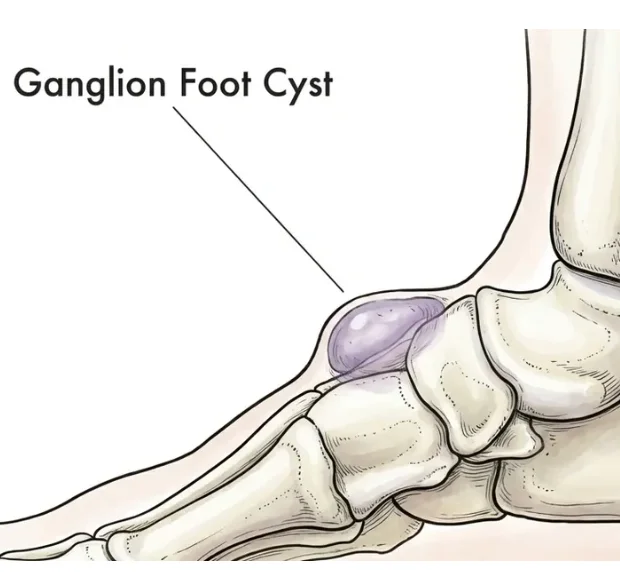
A ganglion is a fluid-filled lump that forms around joints or tendons in the foot and ankle. Although harmless, it can become painful, interfere with footwear, cause pressure on nerves or tendons, or fluctuate in size. When a ganglion causes persistent discomfort or returns after aspiration, surgical excision may be recommended.
What does the operation involve?
- The procedure is usually carried out as a day case under local, regional or general anaesthetic
- A small incision is made over the ganglion
- The sac and its root (the stalk connecting to the joint or tendon sheath) are removed
- The wound is closed with stitches and a dressing applied
- Sometimes a small joint capsule or tendon sheath repair is needed to reduce recurrence risk
Most ganglions are treated with open excision, but minimally invasive techniques may be considered in selected cases.
What to expect on the day
- Usually home the same day
- Foot is bandaged and protected in a post-operative shoe or boot
- You may walk unless instructed otherwise
- Pain is usually manageable with simple painkillers
- Elevation is important for swelling reduction
Recovery: what to expect
0 to 2 weeks
- Foot will be bandaged to protect the wound
- Weight-bearing in a post-op shoe is often allowed, unless otherwise advised
- Keep the foot elevated regularly to reduce swelling
- Mild pain, bruising and swelling are normal
- Stitches are removed at around 10 to 14 days
2 to 6 weeks
- Gradual return to walking as comfort improves
- Transition to roomy soft footwear when swelling allows
- Driving may resume once you can safely operate the pedals (usually 3 to 4+ weeks depending on foot side)
- Return to desk work often from 1 to 3 weeks; active or manual work may take longer
6 to 12 weeks
- Most daily activities become comfortable
- Exercise such as cycling or swimming can usually begin after wound healing
- Swelling and scar sensitivity continue to settle
3 to 6 months and beyond
- Scar tissue softens and the foot feels more natural
- Most patients return to golf, gym and casual hiking by 8 to 12 weeks
- Higher-impact sports by 3 to 6 months depending on comfort
- Final comfort levels may continue to improve for up to 6 to 12 months
Recovery varies with the exact procedure and with each person. You will get a plan specific to your operation.
Expected outcomes
Before surgery
- Pain or discomfort with shoes
- Visible lump, sometimes tender or unsightly
- Possible nerve pressure causing tingling or numbness
- Activity limited if painful or footwear rubs
After surgery
- Lump removed
- Less footwear irritation
- Improved comfort when walking
- Low recurrence rate, but possible
- Scar softens gradually over months
Many patients achieve long-lasting relief after excision. Recurrence can occur but is less likely when the stalk is removed. Protecting the scar, avoiding pressure early and wearing suitable footwear help recovery. Complications are uncommon and usually manageable if they occur.
Consent information
Read the consent form before your operation so you know what you are agreeing to. Bring any questions to your pre-operative appointment.
- Consent form: removal of lump (ganglion) (Word document)
Considering this operation?
Talk it through with Prof Mason. New consultation £250.

Consultant Foot and Ankle Surgeon, MB BCh, PhD, FRCS (Tr&Orth), FRCS (Glasg), SFHEA, FFSTEd. GMC 6074953.