
In short
Morton's neuroma surgery removes (excision) or frees (decompression) a painful, enlarged nerve between the toes, most commonly between the 3rd and 4th toes. It is a day case. For the first 72 hours aim for 80% rest with the foot elevated. Desk work often resumes from 2 to 4 weeks, standing jobs at 6 to 8 weeks, golf and gym by 8 to 12 weeks and higher-impact sport by 3 to 6 months. Numbness in the web space is permanent after excision but rarely troublesome.
- Anaesthetic
- Local or general anaesthetic
- Hospital stay
- Usually a day case
- Walking afterwards
- Heel walking in a post-operative shoe
- Full recovery
- 3 to 6 months; comfort can improve for up to 12 months
Why is surgery sometimes needed?
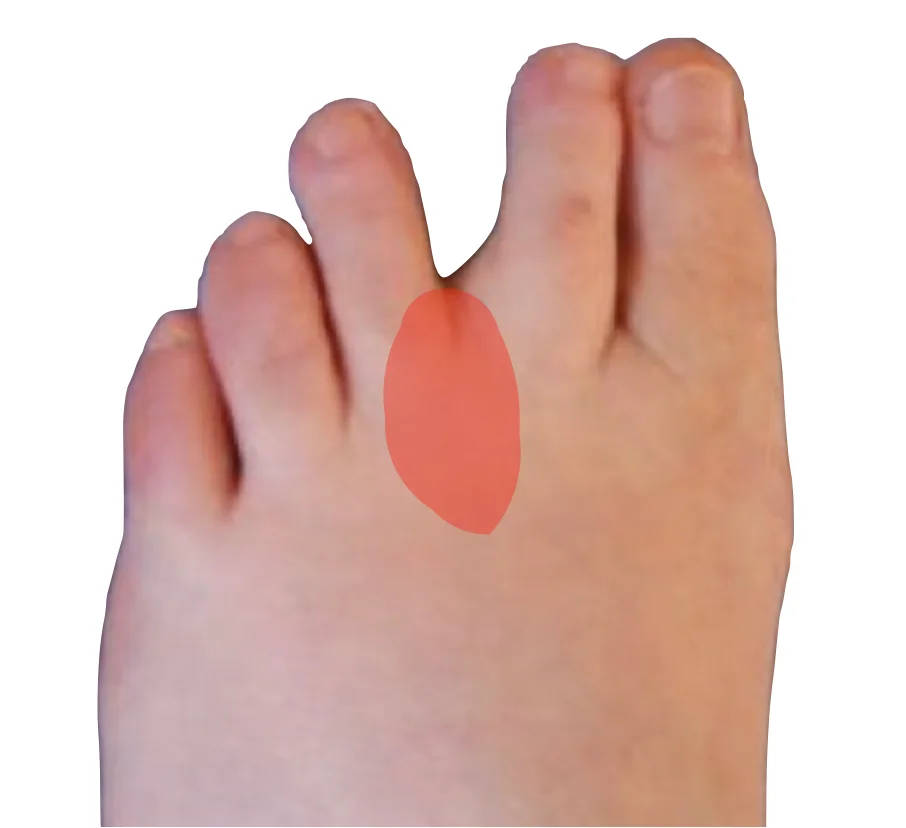
Morton’s neuroma is a painful condition affecting a nerve between the toes, most commonly between the 3rd and 4th toes. It occurs when the nerve becomes enlarged or irritated, leading to sharp pain, burning, tingling or the sensation of “walking on a pebble”. When footwear changes, orthotics and injections no longer provide relief, surgery may be recommended to remove or decompress the painful nerve.
What does the operation involve?
Surgery is usually a day-case procedure performed under local or general anaesthetic. There are two main surgical approaches.
1. Open excision (most common)
- A small incision is made on the top or sole of the foot
- The enlarged nerve segment is removed
- The nerve endings are buried into soft tissue to reduce irritation
- Stitches are used to close the skin
This is the standard and widely successful approach, especially for persistent neuromas.
2. Decompression (neurolysis)
- Tight surrounding tissues (the transverse intermetatarsal ligament) are released
- The nerve is preserved rather than removed
- Considered for early or smaller neuromas, or when nerve preservation is preferred
What to expect on the day
- Usually home the same day
- Foot is bandaged and protected in a post-operative shoe
- You may walk on your heel unless instructed otherwise
- Pain is usually manageable with simple painkillers
- Elevation is important for swelling reduction
Recovery: what to expect
0 to 2 weeks
- A soft dressing or bandage will protect your wound
- You will usually be allowed to walk in a post-op shoe
- Elevation is key: aim for 80% rest with your foot elevated above heart level for the first 72 hours to control swelling
- Expect mild pain, bruising and swelling, which are normal
- Expect tingling or numbness between the toes (permanent if the nerve is removed)
- A ‘lumpy’ feeling around the scar is normal as tissues settle
2 to 6 weeks
- Gradually increase walking indoors first, then outdoors
- Begin gentle foot mobility movements once stitches are removed (unless advised otherwise)
- Transition to loose, wide or soft shoes around 3 to 4 weeks depending on comfort
- Avoid tight footwear, high heels, running and impact activity
- Light duties or desk-based work often resume from 2 to 4 weeks
- Jobs involving prolonged standing or walking may take 6 to 8 weeks
6 to 12 weeks
- Most patients return to normal shoes and daily activity more comfortably
- Light exercise (cycling or swimming) can usually start from 6 weeks if the wound is healed
- Gentle return to longer walks and low-impact exercise is encouraged gradually
- Some residual swelling and sensitivity can remain, especially at the end of the day
3 to 6 months and beyond
- Full recovery is well underway; scar tissue softens and the foot feels more natural
- Most patients return to golf, gym and casual hiking by 8 to 12 weeks
- Higher-impact sports by 3 to 6 months depending on comfort
- Final comfort levels may continue to improve for up to 6 to 12 months
- Numbness in the web space is permanent after nerve excision but is rarely troublesome
- Rarely, regrowth of the nerve end (stump neuroma) may cause persistent symptoms; this can usually be managed if it occurs
Recovery varies with the exact procedure and with each person. You will get a plan specific to your operation.
Expected outcomes
Before surgery
- Burning or tingling pain between the toes
- Feels like 'walking on a pebble'
- Pain aggravated by tight shoes or prolonged walking
- Conservative measures often give only temporary relief
After surgery
- Major reduction in pain
- Improved walking comfort and tolerance
- Less pressure and irritation in footwear
- Tingling reduced (numbness expected if the nerve is excised)
- High rate of lasting symptom relief
Registry data shows that patients report meaningful improvement beyond the threshold considered 'clinically significant', demonstrating robust benefit. Most patients experience sustained pain relief long term. Permanent numbness between the toes is normal after nerve excision and rarely problematic. Recurrence or stump neuroma is uncommon, though possible. Well-fitted shoes with adequate forefoot space support long-term comfort, and a small proportion may need further treatment if symptoms persist or return.
Consent information
Read the consent form before your operation so you know what you are agreeing to. Bring any questions to your pre-operative appointment.
- Consent form: Morton's neuroma excision (Word document)
Considering this operation?
Talk it through with Prof Mason. New consultation £250.

Consultant Foot and Ankle Surgeon, MB BCh, PhD, FRCS (Tr&Orth), FRCS (Glasg), SFHEA, FFSTEd. GMC 6074953.
Prof Mason's published research on this topic
Peer-reviewed papers by Prof Mason and his colleagues. Links open the paper or its PubMed record.
- Lam K, Singh A, Sirikonda S, Narang Y, Ghany J, Mason L, Lampridis V. Cryoablation of Morton's neuroma: an early clinical and radiological outcome study. Journal of Foot and Ankle Surgery (Asia-Pacific), 2023.