
In short
Haglund's excision removes the bony bump at the back of the heel where the Achilles tendon attaches, relieving rubbing and pressure on the tendon. If the tendon is inflamed or degenerate it is treated at the same time, sometimes by lifting part of it and reattaching it securely with anchors. It is usually a day case. You are protected in a boot or cast, move into normal shoes at 6 to 12 weeks, and return to higher-impact sport after 6 months.
- Anaesthetic
- General or regional anaesthetic
- Hospital stay
- Usually a day case
- Walking afterwards
- Limited or protected at first, in a boot or cast
- Full recovery
- 6 months or more if the tendon is repaired
Why is surgery sometimes needed?
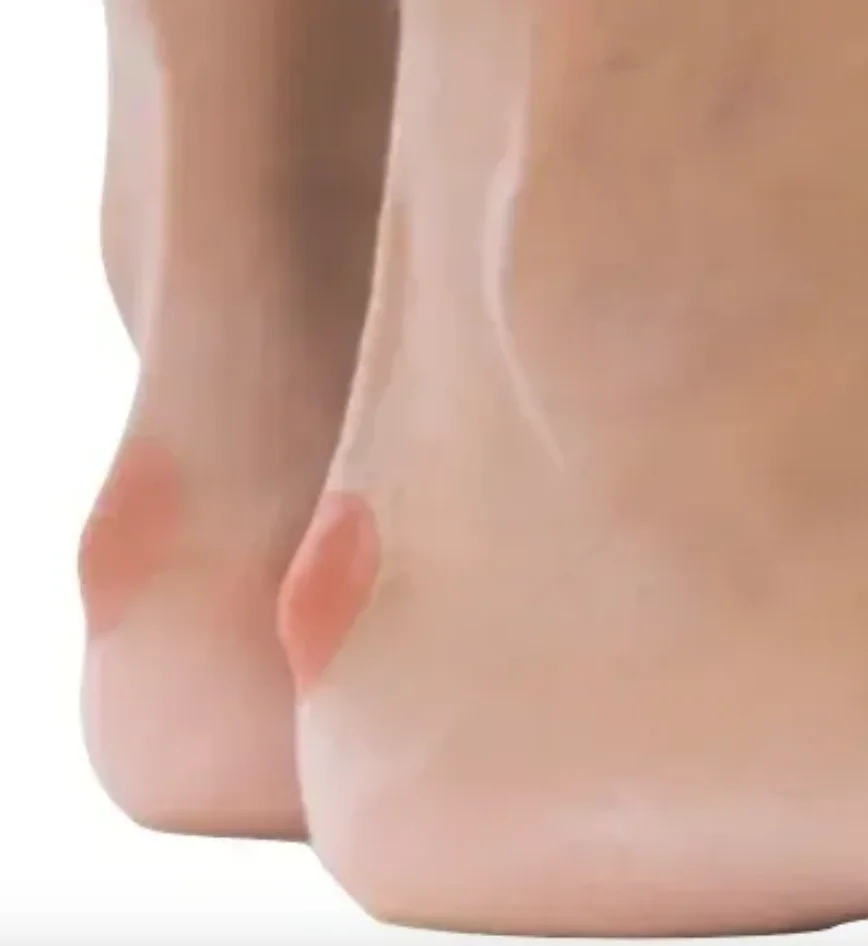
Haglund’s deformity is a bony prominence at the back of the heel where the Achilles tendon attaches. It can cause pain, swelling and irritation, particularly with shoes that rub the back of the heel or when it irritates the Achilles tendon, especially when going uphill. When symptoms persist despite non-surgical treatment, Haglund’s excision may be recommended to remove the bony prominence and relieve pressure on the tendon and surrounding tissues.
What does the operation involve?
- The procedure is usually performed as a day case under general or regional anaesthetic
- An incision is made at the back or side of the heel
- The prominent bone (Haglund’s deformity) is carefully removed
- If the Achilles tendon is inflamed or partially degenerated, this may be addressed at the same time
- In some cases, a small part of the tendon is temporarily lifted and then securely reattached using anchors
- The wound is closed and a protective dressing or boot applied
Prof Mason will explain whether your procedure involves bone excision alone or bone excision with Achilles tendon repair, as this influences recovery time. Recovery is longer if Achilles tendon repair is required.
Recovery: what to expect
0 to 2 weeks
- The foot is protected in a boot or cast, depending on tendon involvement
- Elevation is important to control swelling
- Weight-bearing may be limited or protected initially
- Stitches are removed around 10 to 14 days
2 to 6 weeks
- Gradual progression of weight-bearing in the boot as advised
- Swelling and stiffness are common and expected
- Gentle range-of-motion exercises may begin if appropriate
6 to 12 weeks
- Transition from boot to normal footwear as comfort allows
- Physiotherapy focuses on strength, flexibility and gait
- Walking distances gradually increase
3 to 6 months and beyond
- Continued improvement in pain and swelling
- Return to low-impact exercise such as cycling or swimming
- Heel comfort in shoes continues to improve
- Return to higher-impact activities or sport once strength and tendon comfort allow, after 6 months
Recovery varies with the exact procedure and with each person. You will get a plan specific to your operation.
Expected outcomes
Before surgery
- Pain and swelling at the back of the heel
- Difficulty wearing shoes that rub the heel
- Pain with walking, especially uphill or after activity
- Achilles tendon irritation
After surgery
- Reduced heel pain and pressure
- Improved comfort in footwear
- Less Achilles irritation
- Improved walking tolerance
Most patients experience lasting relief once healing is complete. Recovery can take several months, especially if the Achilles tendon was involved. Supportive footwear and a gradual return to activity improve long-term outcomes.
Consent information
Read the consent form before your operation so you know what you are agreeing to. Bring any questions to your pre-operative appointment.
- Consent form: Haglund's excision (Word document)
Considering this operation?
Talk it through with Prof Mason. New consultation £250.

Consultant Foot and Ankle Surgeon, MB BCh, PhD, FRCS (Tr&Orth), FRCS (Glasg), SFHEA, FFSTEd. GMC 6074953.
Prof Mason's published research on this topic
Peer-reviewed papers by Prof Mason and his colleagues. Links open the paper or its PubMed record.
- Orji C, Goudie P, Mason L. Protocol for functional rehabilitation of Achilles tendon ruptures. Foot and Ankle Clinics, 2026.
- Kotwal R, Gomaa AR, Scarffe D, et al., Molloy A, Mason L. Psychological and functional assessment of Achilles tendon ruptures and their return to sports. The Foot, 2026.
- Solan M, Briggs-Price S, Houchen-Wolloff L, Malhotra K, Mason L, Mangwani J, UK-FATE Collaborative. Incidence of venous thromboembolism following Achilles tendon rupture. Injury, 2025.
- Keene DJ, Alsousou J, Harrison P, et al., PATH-2 trial group (incl. Mason L). Platelet rich plasma injection for acute Achilles tendon rupture: PATH-2 randomised, placebo controlled, superiority trial. BMJ, 2019.
- Ellison P, Molloy AP, Mason LW. Early protected weight-bearing for acute ruptures of the Achilles tendon: do commonly used orthoses produce the required equinus?. Journal of Foot and Ankle Surgery, 2017.